
In light of the recent statements in Government communications and the press, Duna Aszfalt Zrt. considers it important to provide a factual information regarding the Kasomeno–Mwenda Infrastructure Development Project in Africa, currently being implemented by its subsidiary, GED Africa Ltd.
Duna Aszfalt Zrt. bears the financial and commercial risks associated with the project. The investment is in line with the Company's long-term strategy, which aims to deliver competitive successful projects on international markets as one of the leading players in the Hungarian construction industry.
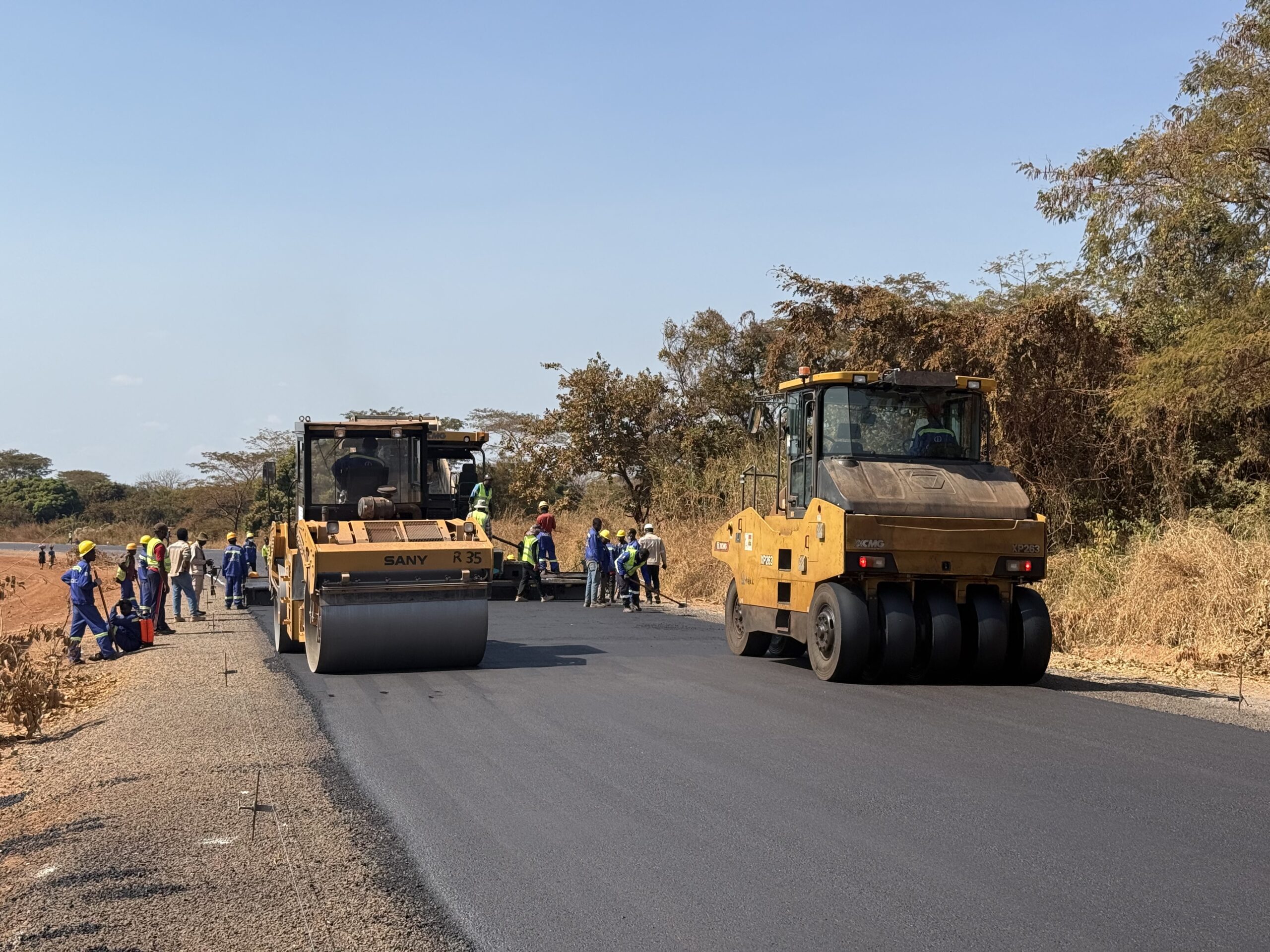
The African project is known as the ‘Kasomeno–Mwenda Toll Road Project’ which involves the development of border infrastructure between the Democratic Republic of the Congo and the Republic of Zambia, together with 184 kilometres of associated road network.
Project preparation and development have been ongoing continuously since 2014. Following an open public procurement procedure, Duna Aszfalt Zrt. joined the successful bidders as a specialist professional investor in 2017. Under the standard terms of a PPP (Public–Private Partnership) contracts, the project involves a concession with a 25-year concession period, comprising a three-year construction period followed by 22 years of an operation period. As part of the project a bridge with a 365-metre span will be built over the Luapula River, which forms the border between the two countries; a total of 184 kilometres of two-lane (2×1) national road will be constructed; and a state-of-the-art border post will be constructed in each country; along with the infrastructure required for operation and toll collection.
Neither of the participating two African states provides any assistance or guarantees for the implementation or financing of the project, the risks are assumed by the investor, while returns on investment are generated from the tolls collected.
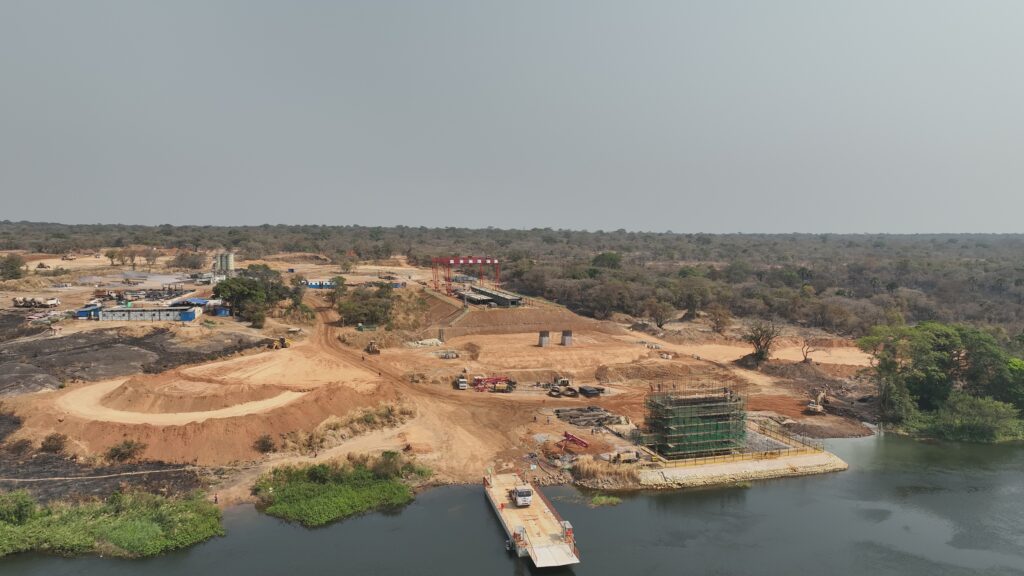
Several significant factors-each of which is highly significant in its own right-support both the necessity of the project and the justification for the creation of this new trade corridor.
The project has attracted international attention from the very beginning. The nearly ten-year preparatory work was supported by almost EUR 6 million in European Union funding, the use of which Duna Aszfalt Zrt. regularly finalized and accounted for in accordance with the conditions of the grant.
A project of this complexity requires cooperation among numerous participants, with Duna Aszfalt Zrt. assuming the role of investor. The bridge was designed by the Hungarian company SpeciálTerv; the road design was prepared by the Zambian firm Rankin; the operational infrastructure design was made by the French company EGIS; while construction works are being carried out by the Chinese contractor CCECC. With the exception of a limited number of minor project components—such as the planned solar park—all engineering designs had been completed and were available by 2025. Consequently, following the commencement of preliminary works in 2024, technical construction activities successfully commenced with financing provided by Duna Aszfalt Zrt.
By undertaking responsibility for financing the project, Duna Aszfalt Zrt. assumed a substantial level of risk while continuously seeking suitable financing partners. As it is customary in such transactions, we explored opportunities within the framework of project finance. However, even after three years, we were unable to find a commercial banking partner willing to provide a loan for the project’s implementation as a venture independent of the Duna Group.
The role of the Export-Import Bank of Hungary (EXIM) is to finance and support Hungarian companies’ efforts to enter foreign markets and their export activities. Accordingly, in the final quarter of 2024, Duna Aszfalt Zrt. approached EXIM to present the financing opportunity associated with the project.
Such financing also represents a significant business opportunity for an export finance institution, as one of the roles of such institutions is to address financing needs that are not covered by the commercial banking market. Following the initial approach, the substantive work really got underway in early 2025. After an extensive ten-month risk assessment and evaluation process lasting until autumn of 2025, EXIM, together with the Hungarian Development Bank (MFB) involved by them, ultimately decided to support our financing application.
It is important to emphasise that the lending institution opted for a bond financing scheme, which is a regulated and permissible form of lending. Furthermore, the loan is not being granted to the African project company, but to Duna Aszfalt Zrt., which has thus been fully included in the risk exposure, consequently, should the project fail, our group of companies will be directly responsible for repaying the full amount of the financing, rather than the taxpayers.
A state guarantee backing the bond was approved for the state-owned banks; Duna Aszfalt Zrt. and its staff neither had nor could have had any influence over this decision, as it falls exclusively within the competence of the Government of Hungary and the relevant public authorities.
The decision regarding eligibility for government support could have been made on the basis of the economic, financial and profitability data and plans submitted by Duna Aszfalt Zrt., its subsidiaries, its staff and the experts involved.
In accordance with the relevant legislation, the decision to provide the state guarantee was taken by the competent bodies of the Hungarian State. Duna Aszfalt Zrt. had no decision-making authority in the preparation of this matter.
It is also important to note that the maturity of the bond financing approved and disbursed specifically for the African project to Duna Aszfalt Zrt. is reduced by the project’s success, while the Hungarian company is the debtor.
The bond’s subscription rate is well above market rates (with a significant risk premium), thus the project generates a profit for the State and, ultimately, for Hungarian taxpayers.
With regard to the project, it is important to mention the significant social contribution that the Duna Group is performing on site. During the project’s implementation, it will employ approximately 120 people from the local population, while the construction activities provide employment opportunities for approximately 5,000 people.
More than 1,000 local residents participate in training programmes covering agriculture, financial literacy and occupational health and safety, which aims to improve their quality of life and strengthen the resilience of local communities.
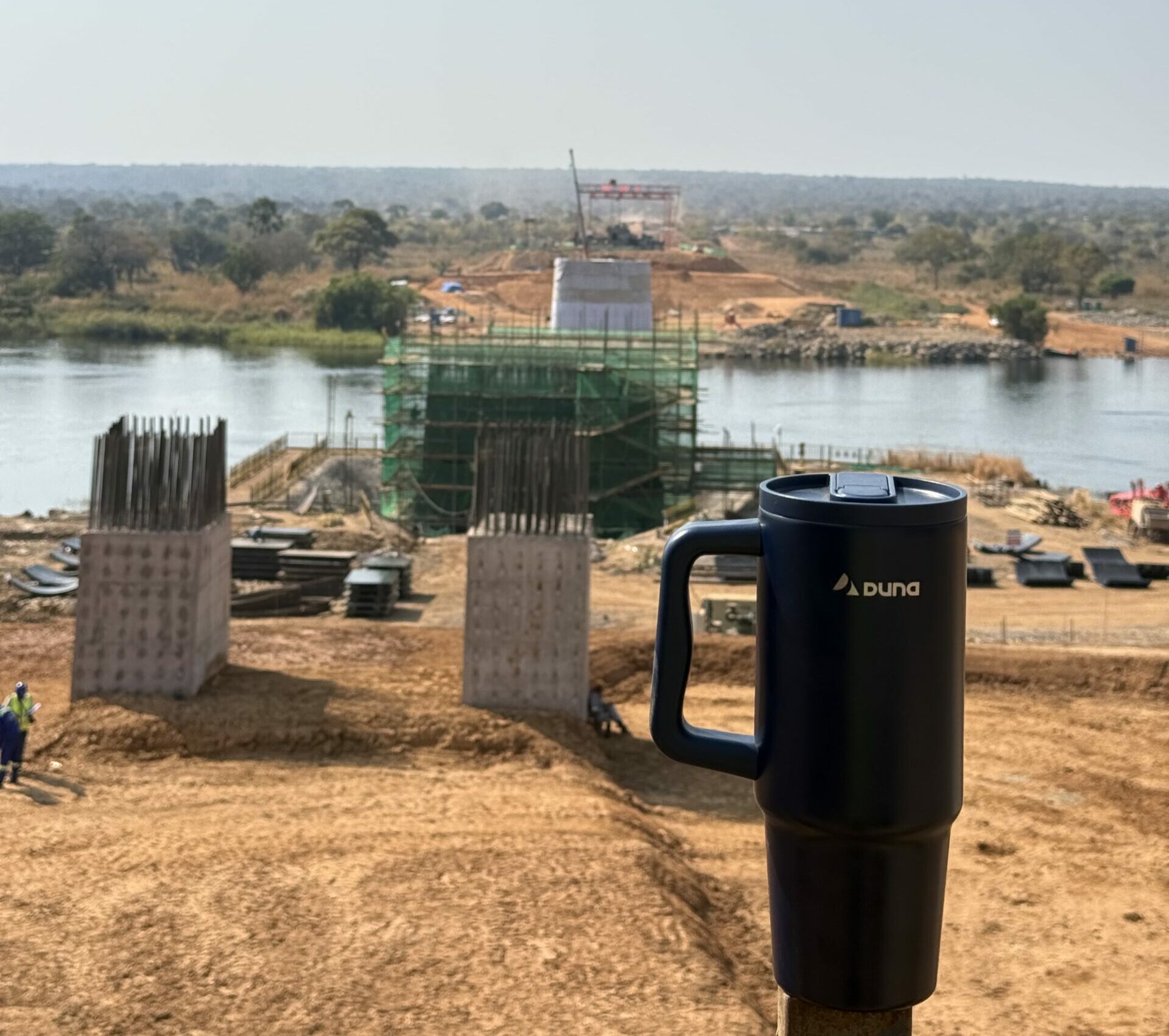
We are constantly promoting Hungary, our beloved homeland, in a region where many people have never even been to Europe, thus introducing Hungarian engineering expertise, work organization and traditions are being introduced to entirely new audience.
For the Duna Group, it is both a source of great pride and an expression of unconditional respect for our homeland that the two construction accommodation sites established on opposite banks of the Luapula River have been named Camp Buda and Camp Pest.
As these facilities will permanently serve as the operational centres for the bridge, highway and border crossing infrastructure, they have the potential to develop into permanent settlements—possibly even towns—over the coming decades.
While we fully recognise that it is natural for the new government to review state involvement on this scale, it is our professional conviction that our Project fully withstands scrutiny with regard to both its legality and justification. We hope that this statement has answered many of the questions raised by the Government, the press and the interested public.
Budapest, July the 24th 2026
#buildinghorizons #GedAfrica #DunaGroup #DunaAszfalt