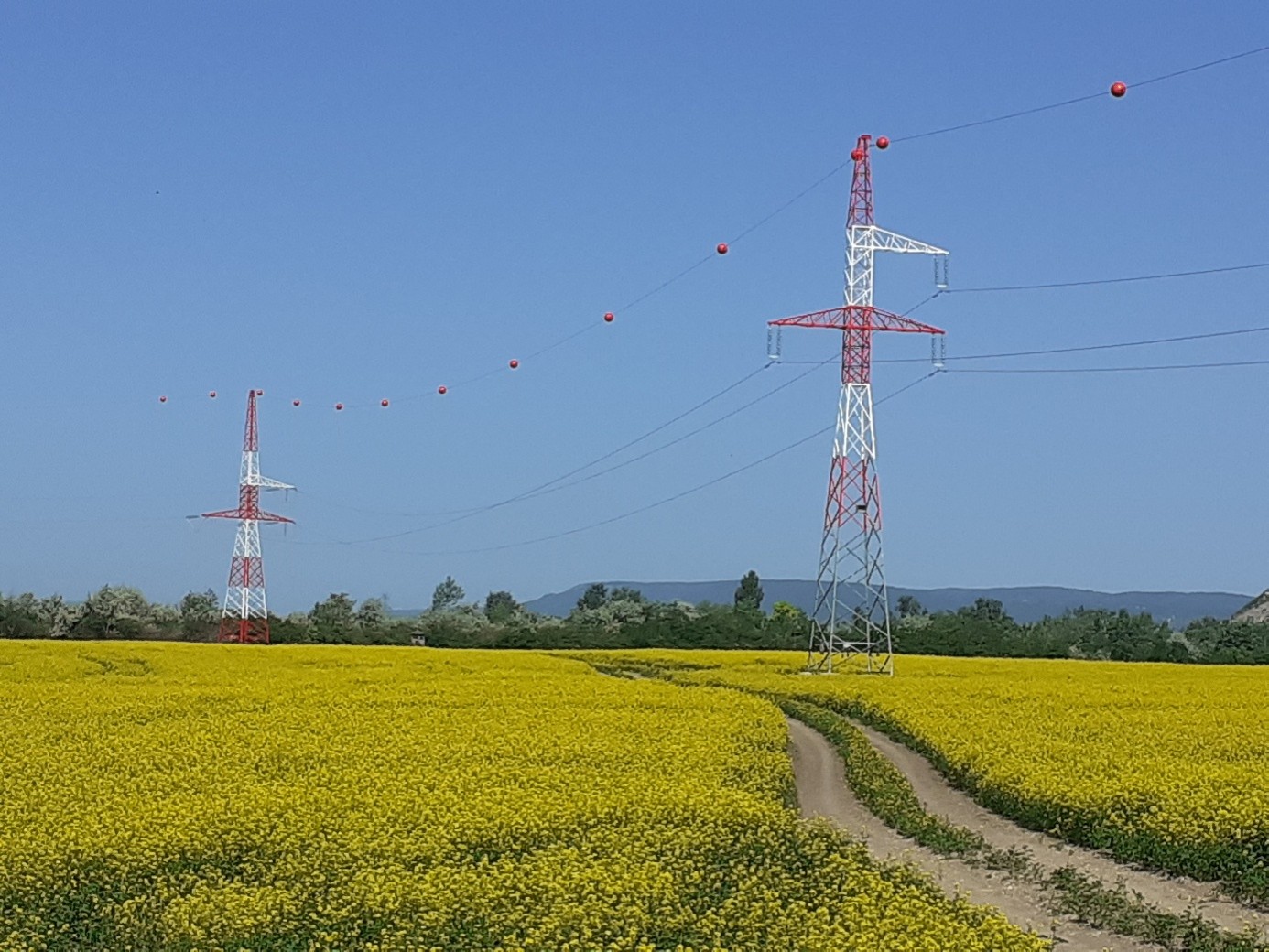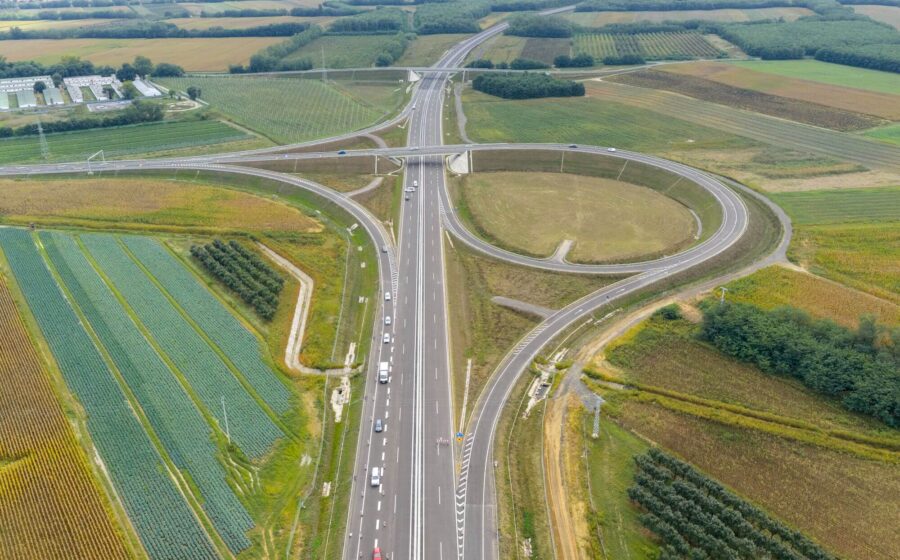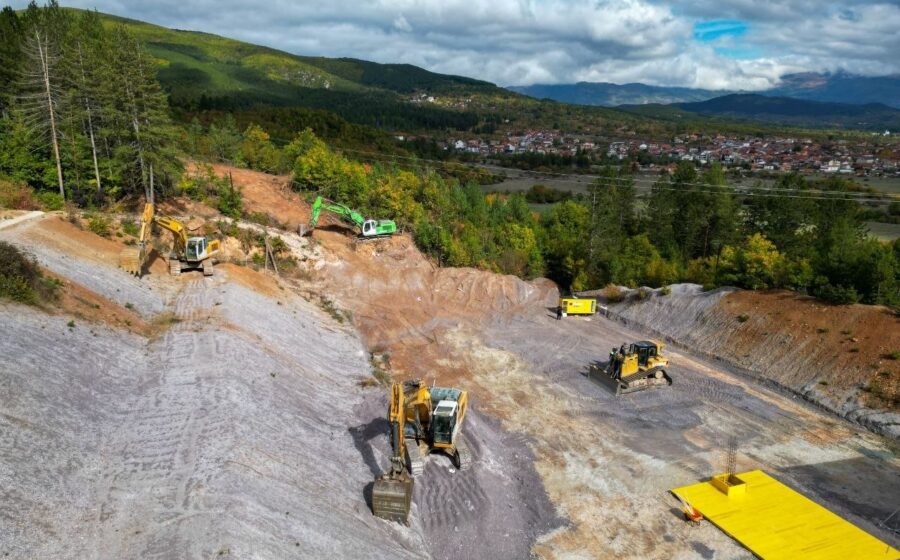
Although transmission line relocation is not one of Duna Aszfalt’s traditional core activities, the Várpalota project clearly demonstrates that we operate with confidence in complex infrastructure development projects beyond the fields of road construction and civil engineering. As part of the works associated with the construction of the Várpalota Defence Industry Complex, more than nine kilometres of transmission lines were rerouted.
The first phase of this project, carried out by Duna Aszfalt Út és Mélyépítő Zrt. – Duna Aszfalt Road and Civil Engineering cPLC. – as the main contractor on behalf of Várpalota Local Government, was necessary because the existing transmission lines crossed the complex’s development site, hindering the project’s implementation and the subsequent safe operation of the facility.
The works involved two such lines. The 132 kV high-voltage Litér–Szabadbattyán power line, 4,673 metres in length, was constructed as an overhead line along the new route, whilst a 4,651-metre section of the 22 kV medium-voltage Várpalota–Csór line was relocated as an underground cable.
The differing technical designs of the two line sections required precise planning, coordinated construction and close interdisciplinary cooperation. A key consideration during the development of the new routes was to ensure that the completed systems would integrate safely with the existing electricity network and guarantee reliable operation in the long term as well.
The handover of the worksite took place on June the 11th 2025, and the first phase was successfully completed with a technical handover on August the 19th 2026.
The completed sections of the line were subsequently handed over to the investor and then to the operator; they are now in operation as part of the electric grid.
The completion of the first phase of the project marks an important milestone in the series of infrastructure developments linked to the Várpalota Defence Industry Complex, and is yet another example of how Duna Aszfalt’s technical expertise and construction experience can be successfully applied also to the implementation of complex, specialised technical tasks.